Guest authored by Professor Rosie Meek
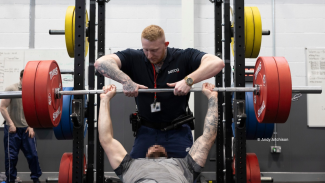
Could prison gym staff unlock a solution to calmer prisons and reduced reoffending? This was the question Spark Inside set out to answer with a pilot training programme in 2024, training Physical Education Instructors at HMP Brixton with life coaching skills.
As a chartered psychologist and University academic, I’ve been researching the positive impact that sport and physical activity can play in prison settings for two decades, together with the valuable and often unique role that voluntary and community organisations more broadly can play in reducing reoffending and promoting desistance from crime.
I was asked to evaluate the impact of Spark Inside’s programme, with my findings concluding that this small yet innovative pilot showed promise for further expansion across our prisons, with potential benefit to staff at many different levels.
So, why start in a prison gym?
Prison gyms have an important role to play in helping to promote the health and well-being of both prisoners and staff, contributing to a safer working and living environment, and helping prisoners to contribute positively to the communities they are returning to after release.
My own research has captured the transformative impact that prison gyms — and the staff who work tirelessly and creatively within them – can have on people serving custodial sentences.
This can range from supporting people in drug recovery through physical movement, motivating someone to improve their physical and psychological health through exercise, or even inspiring someone to embark on work or study in the sports and fitness sectors.
Gym staff typically have a uniquely strong relationship with those in their care, based on mutual respect and a shared passion for sport and fitness. I have lost count of the times I’ve been told that gym staff are often relied upon to visit a prison’s residential unit when things are getting tense, or that the gym is the place where individuals can really shine and meet their full potential.
This recent video from the Ministry of Justice is a case in point; it shows Prisons Minister Catherine McKinnell being shown the gym on a visit to a prison in Middlesbrough. A staff member refers to it as ‘the heart’ of the prison, averaging 200 people a day through their doors.
Why are coaching skills useful?
Desistance theory shows that personal relationships, individual interactions, and improved communication are key to reducing reoffending. Equipping these staff with coaching skills enables them to strengthen their many daily conversations, turning them into opportunities for support. One participant in Spark Inside’s pilot shared: “It was brilliant because that’s our job anyway, but it gave us more ammunition.”
From speaking to these staff, it was clear the benefits of this training rippled far beyond the gym or indeed the prison. Interviewees felt it supported their own wellbeing, their collaboration with colleagues, and even their parenting!
Their perspective was it could prove useful to staff in many different roles, with one participant telling me: “The Prison Service should introduce elements of it in all staff training, it’s a people job and you deal with people whether as staff or prisoners, to be more aware and tolerant it would be great for anybody in the job.”
Based on what I observed, and what participants told me, I recommended that HMPPS explore rolling Spark Inside’s coaching skills out as part of the mandatory training for PEI staff and consider offering it to any role within the Service that includes frontline contact, such as Offender or Custodial Managers.
There is more to learn about the long-term impact of this training. Spark Inside will soon be delivering another pilot, this time training members of the management team at HMP Pentonville, and I’m interested to see the results. For now, I’m glad the unsung heroes of HMP Brixton’s gym – and all those they come into contact with — have stood to gain these skills.